Tuesday, March 7, 2017

Forgaing for Buggy Delights

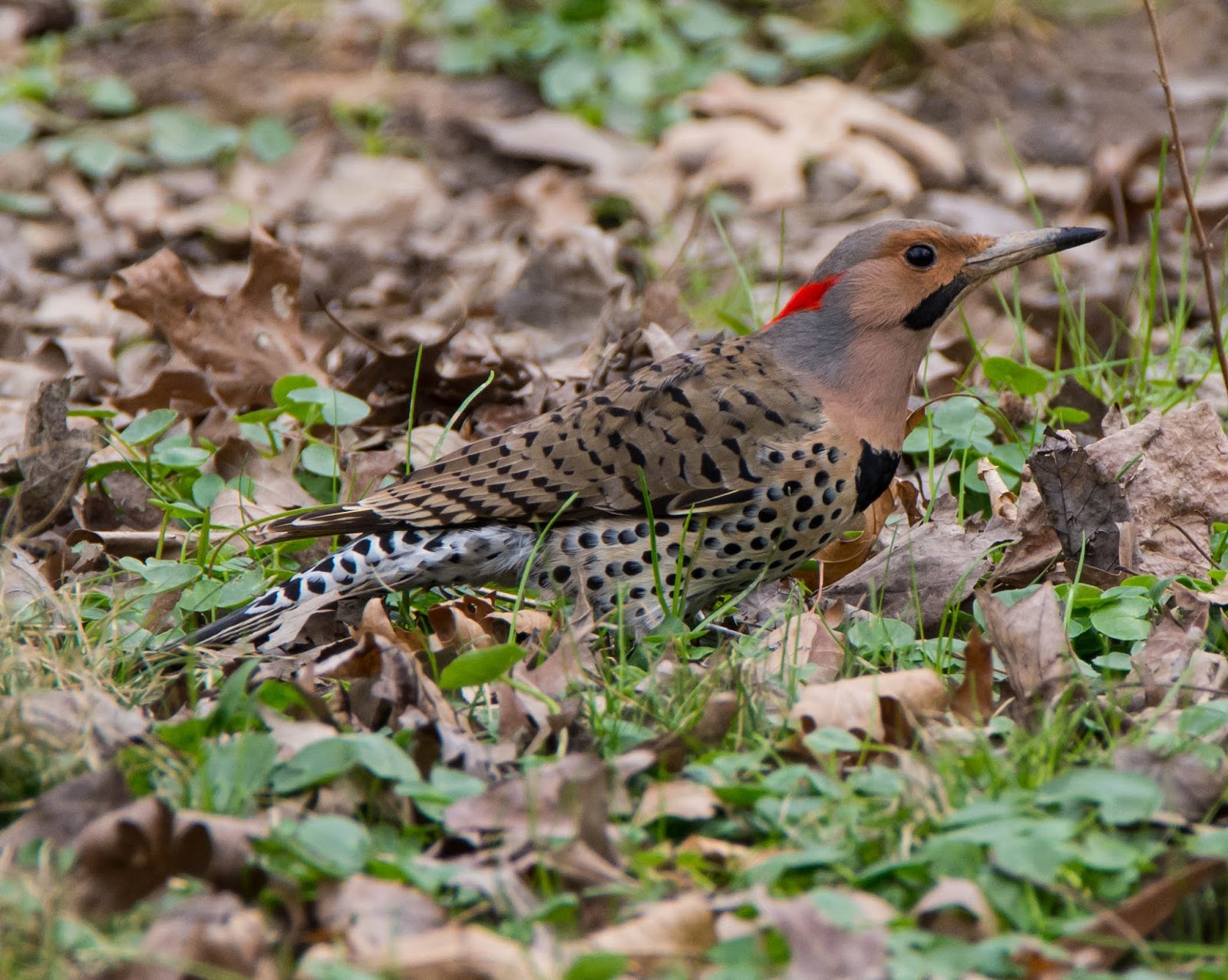
I spent a good part of the afternoon on March 7th in Luria Park near the Raymondale entrance. A lot of leaf flipping on the forest floor caught my eye. A male Northern Flicker was exuberantly thrashing about the leaf litter and probing the ground underneath.


 Northern Flickers love to eat ants and ant larvae. They have a tongue that will stick out about two inches from the end of their beak to get the tasty insectiod treats. They feed primarily on the ground and while walking through the woods or any grassy area you could scare them up from the ground.

A few feet from the Flicker was a male Red-bellied Woodpecker also foraging.


He chose to hunt near a fallen rotted tree for his favorite food: spiders. They will also eat seeds and nuts. It is possible he is finding tasty arthopod or nut in this location.

All I know is I am glad I don't have to shove my face and tongue into the ground to get dinner!

Thursday, March 2, 2017

Merlin in Luria Park

Late in the day on March 1st,  we spied a slender silhouette darting above the tree tops like Top Gun fighter jet. The bird landed on a tall tree top to the north of the boardwalk in Luria Park and we got a nice view of it and identified the bird as a Merlin.


The Merlin is a smaller raptor that winters along the east coast before migrating north to breed in Canada. They like to eat birds and can catch them in mid-air. A fast and fierce raptor in a small 10-12 inch package.

Wednesday, February 15, 2017

More About Luria Park Red-headed Woodpeckers

Our Luria Park Red-headed Woodpeckers have attracted the attention of the local birding community. If you see folks in the park with binoculars you know why. And if you don't have a pair of binocs, you may want to get a pair as spring migration season is on the way and we'll host another late afternoon birding walk (date and time TBA).

In the meantime, here are some better photos I took recently of one of the Red-headed Woodpeckers who live near the Raymondale end of Luria Park.


Sunday, February 5, 2017

Red-headed Woodpeckers in Luria Park

On the Raymondale side of Luria Park, to the left of the entrance, high on a tree snag is what we are pretty certain is a Red-headed Woodpecker nest cavity. Today we observed two RHWO in and around a hole near the top of the snag. A Red-bellied Woodpecker challenged the Red-Headed Woodpecker but didn't encroach on the cavity.

The snag is up very high so getting super clear photos even with a long lens was a challenge.

Here is a RHWO in the nest cavity. The bird was in here for a very long time.

The same bird fully emerged from the cavity. We are hoping that this spring brings us RHWO chicks! This cavity will be monitored on a regular basis. The population of the RHWO has declined drastically in the past fifty years due to habitat loss. They prefer dead old and tall oaks with a forested under story. Luria Park certainly has that! They are omnivores and will catch flying insects with great skill. They will store acorns and seeds in tree bark or the shingles of houses. They will also raid bird's nests for eggs or baby birds.

You will know they are near because they like to chatter. Just look up!


Wednesday, October 12, 2016

Red-breasted Nuthatch: Winter Visitor

This afternoon, October 13th, we saw for the first time in our yard, a Red-breasted Nuthatch. He was flitting around our half dead dogwood tree by the street. I managed to get one decent photo for you of the distinctive head stripes and orange breast.

This little bird with a stumpy tail is one of our winter birds. They have been coming to the area about a week and some will over winter here. They will come to your suet feeder. A wonderful little bird who finds our winters warmer than in their Northern Canada breeding ground!

Sunday, September 11, 2016

Yellow-billed Cuckoo In Luria Park

Early this morning in hopes the humidity was less we headed out to see any fall migrating birds heading south. We spotted a Yellow-billed Cuckoo in the maple tree by the bridge in Luria Park.

The Yellow-billed Cuckoo is one of our summer birds spending winter in South America. They like to stay hidden in the tree canopy preferring to remain very still unless they are foraging for caterpillars. They prefer large hairy ones like tent caterpillars.

They are a large slim bird about 11 inches long. They have a distinctive long black and white tail. They will perch with shoulders hunched to disguise their bright white underparts while they look for tasty fat insects.

Exciting to see this elusive bird in Luria Park. Fall migration is in full swing and you may very well see some unusual birds on their way south.

We also saw a Brown Thrasher gobbling down the fruit from a tree by the bridge.
These large thrushes will migrate to Georgia and Florida for the winter. And this fellow was fueling up for his journey!


Monday, July 18, 2016

Our Backyard Birds in Summer

Recently Sanny Wroblewki and Whitney Redding sent me photos of some summer bird action on Add Drive.

Whitney carefully got this shot of the new House Wren hatchlings sleeping in a stroller pocket. Soon these fuzzy cuties will be singing in the trees!

Sanny got this shot of a male Goldfinch enjoying black-eyed Susan seeds. Please keep any plants that have gone to seed in your yard for a while before deadheading them. The songbirds love the seeds!