Monday, May 7, 2018

The Bay-breasted Warbler

This morning in Luria Park I saw the Bay-breasted Warbler which is an uncommon warbler. He winters in northern South America, flies along the eastern Central American and Mexican coast, goes up the US Atlantic flyway and doesn't stop to breed until it arrives in northern Canada. I was thrilled to see him in our park and to get a few half-way decent shots before he flew away.


Sunday, May 6, 2018

May 6 Was Migratory Bird Mania In Luria Park

Dan and I spent two hours in Luria Park around lunch time today (May 6th) and were rewarded with lots of migratory birds! The recent cold front most likely brought them in and we were thrilled to see so many. Here are the highlights:

 Black-throated Blue Warbler.


Black-throated Green Warbler.


 Blackburnian Warbler.


 Chestnut-sided Warbler.


 Indigo Bunting (seen on our Brad Street backyard).


 Magnolia Warbler.


 Northern Waterthrush.


Wood Thrush.

Take your binoculars into the park, look for something moving in the trees, and take a look. You never know what you may see! These feathery jewels are amazing, don't you think so?

Thursday, May 3, 2018

Spring Migration is in Full Swing!

Hello!

Luria Park and our backyard on Brad Street have given us lots of spring/summer birds!

The highlight was a Cape May Warbler seen at the Luria Park playground on May 2, about 9:30 oin the morning.
This warbler is small, very active, and has a distinctive rusty swath beneath the eye. It winters in Cuba and breeds in northern Canada.

This is a female Rose-breasted Grosbeak at the sunflower seed feeder in our backyard. Her plumage is quite drab compared to her male counterpart.

This stealthy fellow is the Common Yellow-throat. His song is a "witchety-witchety-witchety" song and he prefers the cover of undergrowth. He was in Luria Park near the creek.

This little brown fellow is the House Wren. Small and mighty, this bird was pulling nest fluff from a previous nest only to transfer it across the backyard to another birdhouse!

A Red-shouldered Hawk was tending to her chick on a nest deep in Luria Park. This is the second year these raptors have made a home in our park.

An American Crow was taking a drink from our birdbath before gathering a twig and taking it high to the top of white pine tree on Brad Street where it was building a nest. Love 'em or hate 'em, crows will keep a street clean of squirrels and other critters that lost the battle with car traffic.

This stout fellow is a male Brown-headed Cowbird. I call him "Mr. Nasty" as cowbirds will ruthlessly rob other bird's nests.

Another migratory bird, is the Yellow-billed Cuckoo, see high on a maple tree off of the Luria Park baordwalk. He's a larger bird, bigger than a robin, and winters in Mexico and Central America. They could potentially breed here.

Happy Spring!


Monday, April 23, 2018

Spring Is Finally Here

This morning, April 23rd, I birded Luria Park for about an hour. So happy to our spring birds have returned. Some may stay and some may go.

The highlights included an Ovenbird foraging in the leaves. If this bird finds a mate in our park and builds a nest, the nest will be on the forest floor. It will look like a dome of grass and leaves with an entrance, like a little oven.


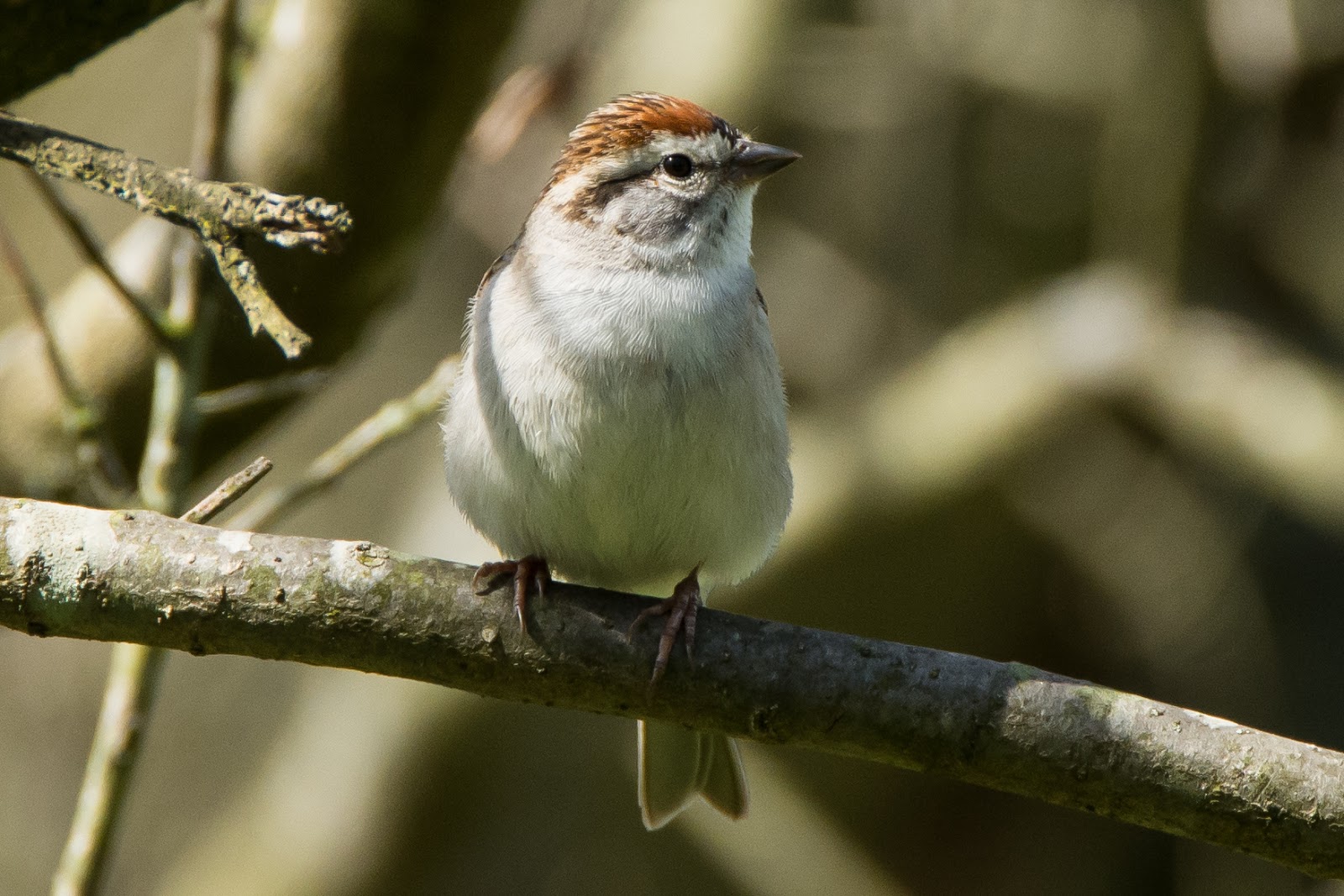
Another spring bird, a very tiny fellow, is the Chipping Sparrow. He was foraging on the edge of the asphalt path and flew up into the willow oak by the basketball court. You will know him by his small size and bright rusty crown.


A Brown Thrasher was singing high in the sweet gum tree by the asphalt path. He was quite vocal and making his music loud and clear across the open expanse of the park. This is such an exciting birdy time in our neighborhood and in Luria Park. Keep your eyes open!


Monday, September 11, 2017

An Unusual Sighting at Fairview Park Pond

This afternoon Whitney Redding sent me a message about a bird she saw at the small pond by the Fairview Park Marriott. She wanted to know what this sleek, hook-billed bird she saw was. She took a photo from a distance with her cell phone. At first and second glance of Whitney's photo, I knew the bird but for the life of me I couldn't figure out why it was in the little pond near the beltway.

Dan and I raced over there with our cameras. We saw the bird swimming along the edge of the pond, head down, fishing. The bird, which we have seen in great numbers in the Potomac and Rappahannock Rivers and Chesapeake Bay, was a Double-crested Cormorant.

The Double-crested Cormorant likes to do two things: fish and rest. They don't have as much preening oil as other water  birds so they dry their wings after time in the water.

Their feathers get soaked and makes them slick and fast underwater.

The birds are numerous and not endangered. They can be found in freshwater and brackish, pretty much anywhere there's fish.

Thanks, Whitney, for your keen eye. There's a new bird to add to our neighborhood birding list!


Thursday, September 7, 2017

Ruby-throated Hummingbird: Fall Migration and Hurricanes

With September comes the ramping up of fall migration for neo-tropical songbirds. We have observed in our yard for over a week now, Ruby-throated Hummingbirds feeding aggressively form the cardinal vine's red flowers and from our feeder. Even in the rain that occurred all day on Wednesday, I observed two birds taking turns at the feeder. The rain ruffled their tiny feathers and made them a little more tired so they took rest breaks by the feeder before flying into the trees to get shelter from the rain.


I have been researching how hurricanes affect fall migration. Many birds, esp. seabirds, fly along the coast. They can fly further inland rather than use energy battling headwinds. Some larger seabirds will go through the hurricane and stay in the calm eye! Birds are quite sensitive to changes in barometric pressure and winds so they adjust their routes as needed. The biggest threat to birds in hurricanes can be the aftermath with destruction of habitat and food sources such as winds blowing fruit and seeds from vegetation.  Some birds not native the continental U.S.  have been shifted by hurricanes from their habitat to the U.S. mainland. It will be interesting to see any observations after Harvey and Irma on any birds native to Mexico or the Caribbean being blown into the U.S.

Thursday, June 1, 2017

It's Fledgling Season!

On Wednesday, neighbor Tony Britton sent me photos of two fledgling American Crows. I have observed the adults earlier this spring carrying nesting material, just couldn't find the nest. So a big thanks to Tony for sending me these photos. She was concerned that the fledglings may come to harm on the ground, but from my research it is best to leave baby birds and other animals alone as the parents will usually take care of them. Keeping an eye on them is a good idea in case the parents don't return. In that case if there is not change after a couple of days, please contact Fairfax County Animal Rescue/Control at 703-691-2131.


Thank you, Tony, for your vigilance and for sharing your photos!